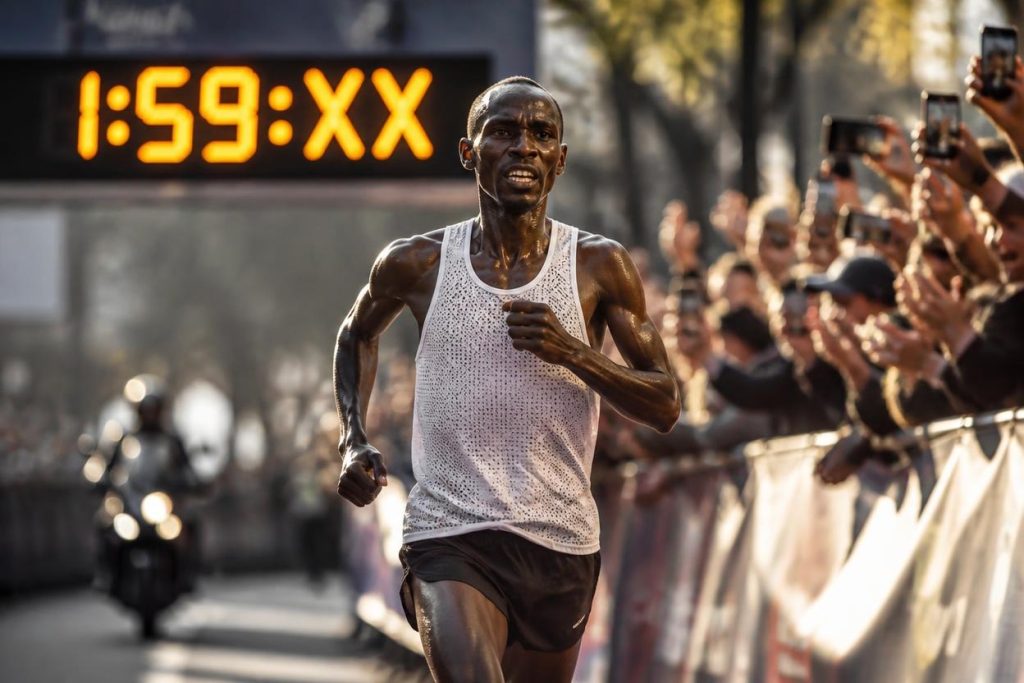
Running a marathon is already a crazy achievement. Covering 42.195 kilometers without giving up takes serious discipline, mental toughness, and a whole lot of determination. But imagine doing all that in less than two hours. Sounds unreal, right? Well, that’s exactly what makes the sub-two-hour marathon one of the most fascinating challenges in the world of sports.
For years, breaking the two-hour barrier seemed almost impossible. It wasn’t just about running faster. It was about pushing the human body beyond what people thought was physically achievable. And honestly, that’s what makes this challenge so exciting.
The Dream That Changed Marathon Running Forever
For a long time, the two-hour marathon was considered the ultimate milestone in long-distance running. Elite athletes were already running at ridiculous speeds, but shaving those extra seconds off the clock was incredibly difficult.
Then came Eliud Kipchoge, the Kenyan running legend who completely changed the conversation.
In 2019, Kipchoge made history by completing a marathon distance in 1:59:40 during the INEOS 1:59 Challenge in Vienna, Austria. Yep, he actually did it. However, there’s a catch: the event used controlled pacing, rotating pacemakers, and other special arrangements, meaning the performance wasn’t eligible as an official world record.
Still, the message was clear: the human body might be capable of more than we ever imagined.
Why Running Under Two Hours Is So Freaking Difficult
Running 42.195 kilometers in under two hours means maintaining an average pace of around 2 minutes and 50 seconds per kilometer.
Let that sink in for a second.
That’s insanely fast, especially when you have to maintain that speed for an entire marathon. Most recreational runners would struggle to hold that pace for even a short distance.
Elite marathon runners need an incredible combination of cardiovascular fitness, muscular endurance, efficient running mechanics, and mental strength. One tiny mistake in pacing can seriously affect their performance.
Nutrition, hydration, weather conditions, and even the course layout also play a massive role. Basically, everything needs to come together perfectly.
Technology Is Changing the Game
Modern marathon running isn’t just about natural talent and endless training anymore. Technology has become a huge part of the sport.
Advanced running shoes featuring carbon-fiber plates and lightweight foam have helped elite athletes improve running efficiency. Meanwhile, better training methods, performance analytics, and recovery techniques allow runners to prepare smarter than ever.
Of course, some people argue that technology is making marathon records less about human ability and more about equipment.
But let’s be real: every athlete still needs incredible physical capabilities to run at that level. A pair of expensive shoes won’t magically turn an average runner into an Olympic champion.
The Mental Battle Is Just as Brutal
Here’s something people often underestimate: the mental side of marathon running.
Imagine reaching kilometer 35, with your legs feeling like concrete and your body screaming at you to slow down. Now imagine knowing that even a tiny drop in speed could destroy your chance of breaking two hours.
That’s where mental toughness comes in.
Elite marathoners need to stay focused, control their emotions, and keep pushing even when exhaustion starts taking over. It’s not just a physical race; it’s a battle between determination and the body’s natural limits.
And honestly, that’s pretty inspiring.
What Comes Next for the Sub-Two-Hour Marathon?
The fascinating thing is that the sub-two-hour marathon is no longer just a fantasy. Kipchoge’s historic run proved that the barrier could be broken under controlled conditions, while the sport continues to evolve through better training, technology, and stronger competition.
The next big question is whether athletes can consistently achieve an official sub-two-hour marathon under standard competitive conditions.
That’s a completely different challenge, and one that keeps marathon fans watching closely.
At the end of the day, breaking two hours represents much more than a fast finishing time. It’s about curiosity, innovation, and the human desire to go beyond what seems possible.
And who knows? The next generation of marathon runners might just make the impossible look completely normal.